The AI Gap for Nonprofits: A Practical Guide for 2026
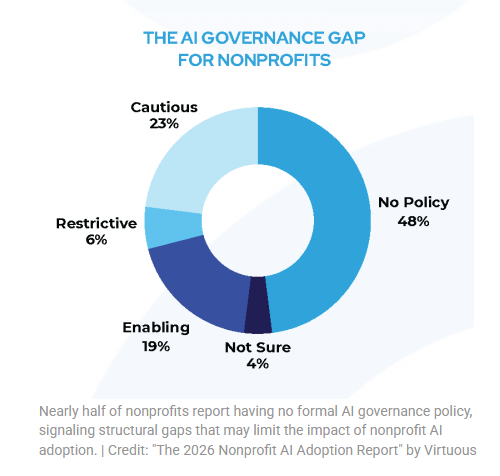
Artificial intelligence is shaping how organizations raise funds, analyze data, and deliver services. From donor segmentation tools to automated grant writing assistants, AI offers real opportunities to increase impact. Yet many nonprofits face a growing AI governance gap. They adopt tools faster than they build the policies and oversight needed to use them responsibly.
This gap creates real risks. It can expose sensitive data, introduce bias into decision making, and erode trust with donors and communities. At the same time, strong governance can turn AI into a strategic advantage.
What Is the AI Governance Gap?
The AI governance gap stems from organizations grabbing AI tools fast but moving slow on creating policies.
Nonprofits often operate with lean teams and limited budgets. This makes it tempting to adopt AI solutions quickly without a full review process. Staff might use free or low cost tools for content creation, donor outreach, or analytics without clear guidelines.
The result is a patchwork of AI usage with little oversight.
Common signs of an AI governance gap include:
- No formal AI policy or usage guidelines
- Limited understanding of how AI tools handle data
- Lack of staff training on ethical AI use
- No process for evaluating AI vendors
- Unclear accountability when issues arise
Why AI Governance Matters for Nonprofits
Nonprofits rely heavily on trust. Donors, partners, and communities expect transparency and ethical behavior. Poorly governed AI can undermine that trust quickly.
1. Data Privacy Risks
Nonprofits often handle sensitive information such as donor records, health data, or personal stories. When staff enter data into AI tools without protections, that data may get stored or used in ways beyond your control.
2. Bias and Fairness Concerns
AI systems can reflect biases present in their training data. This can affect how nonprofits allocate resources or engage with communities. Without governance, these biases can go unnoticed.
3. Reputational Damage
A single misstep with AI can lead to public criticism. For example, using AI generated content that misrepresents a community can damage credibility.
4. Compliance Challenges
Regulations around AI and data privacy continue to evolve. Nonprofits must stay ahead of these changes to avoid legal issues.
Strong governance helps mitigate these risks while allowing your organization to benefit from AI.
The Opportunity: Responsible AI as a Strategic Advantage
Closing the governance gap is not just about risk reduction. It also creates opportunities.
Organizations that implement responsible AI practices can:
- Build stronger donor trust
- Improve decision making with reliable data
- Increase operations and efficiency
- Attract partners who value ethical innovation
In short, governance enables sustainable AI adoption.
Key Components of AI Governance for Nonprofits
To close the gap, nonprofits need a structured approach. Here are the core components of effective AI governance.
1. Clear AI Policies
Start with a written AI policy. This should define:
- What tools are approved
- What data can be used with AI
- Acceptable and not acceptable use cases
- Review and approval processes
Keep the policy simple and practical so staff can follow it.
2. Data Protection Standards
Establish rules for how data is handled when using AI tools. This includes:
- Avoiding the use of sensitive data in public AI systems
- Using secure, vetted platforms
- Implementing access controls
3. Vendor Evaluation
Not all AI tools are created equal. Evaluate vendors based on:
- Data privacy practices
- Transparency in how models work
- Security certifications
- Support and documentation
Create a checklist to standardize this process.
4. Staff Training
Even the best policies fail without proper training. Educate your team on:
- How AI tools work
- Risks and limitations
- Ethical considerations
- Your company’s specific guidelines
Training should be ongoing, not a one time event.
5. Accountability and Oversight
Assign responsibility for AI governance. This could be a committee or a designated leader.
Ensure there is a process for:
- Reporting issues
- Reviewing AI use cases
- Updating policies as needed
Governance is not static. It evolves with your organization.
Practical Steps to Close the AI Governance Gap
You don’t need a large technology budget to get started. To read in more depth about the beneifts of guardrails with AI, read here.
Below is a step by step approach.
Step 1: Conduct an AI Audit
Identify all AI tools currently in use. Talk to staff across departments to understand how they are using AI.
Document:
- Tools being used
- Purpose of use
- Types of data involved
This creates a baseline for governance.
Step 2: Prioritize Risks
Not all AI use cases carry the same level of risk. Focus first on:
- Tools that handle sensitive data
- High visibility outputs such as public communications
- Decision making systems
Addressing high risk areas first delivers immediate value.
Step 3: Develop Quick Win Policies
Start with simple guidelines such as:
- Do not input confidential data into public AI tools
- Review AI generated content before publishing
- Use only approved platforms
These quick wins can significantly reduce risk.
Step 4: Build a Governance Framework
Expand your policies into a more comprehensive framework over time. Include:
- Roles and responsibilities
- Approval workflows
- Monitoring processes
Step 5: Measure and Improve
Track how AI is used and identify areas for improvement. Gather feedback from staff and stakeholders.
Update your governance approach regularly.
Common Mistakes to Avoid
As you build your AI governance strategy, watch out for these pitfalls.
- Complicating policies
- Ignoring staff input
- Treating governance as a one time task
- Focusing only on risk
Balance risk management with innovation. Governance should enable progress, not restrict it.
The Future of AI Governance in the Nonprofit Sector
AI will continue to transform the nonprofit landscape. Organizations that act now will be better positioned to adapt.
We expect to see:
- Increased regulation around AI and data use
- Greater emphasis on transparency and accountability
- More collaboration between nonprofits on best practices
By closing the governance gap today, your organization can lead rather than react.
Take the Next Step
AI is a powerful tool, but only when used responsibly. Closing the AI governance gap is not about slowing down innovation. Building a foundation allows your organization to grow with confidence.
If your nonprofit is ready to develop a practical AI governance strategy, the team at 4BIS can help. Explore tailored solutions and start building a smarter, safer future for your mission today.